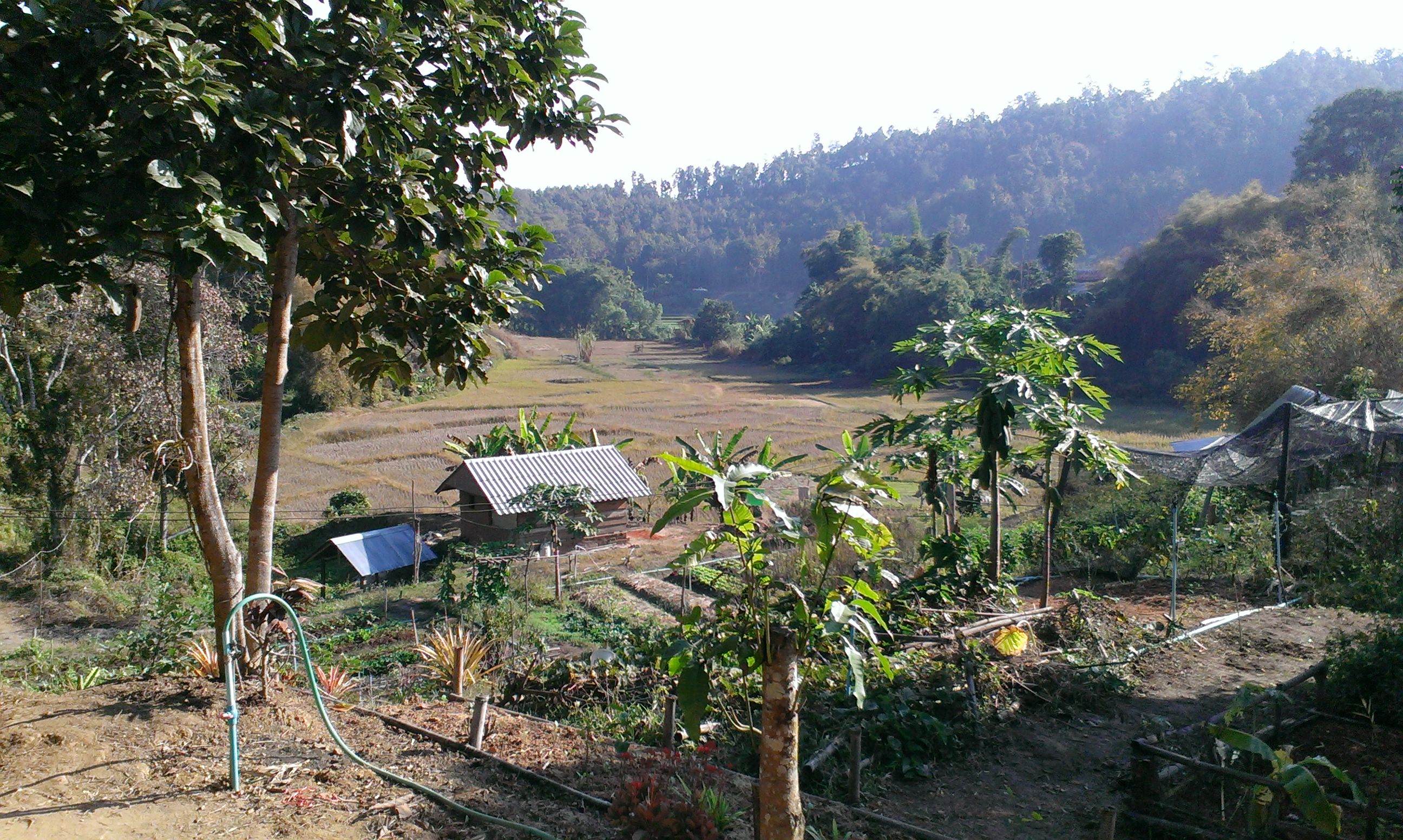
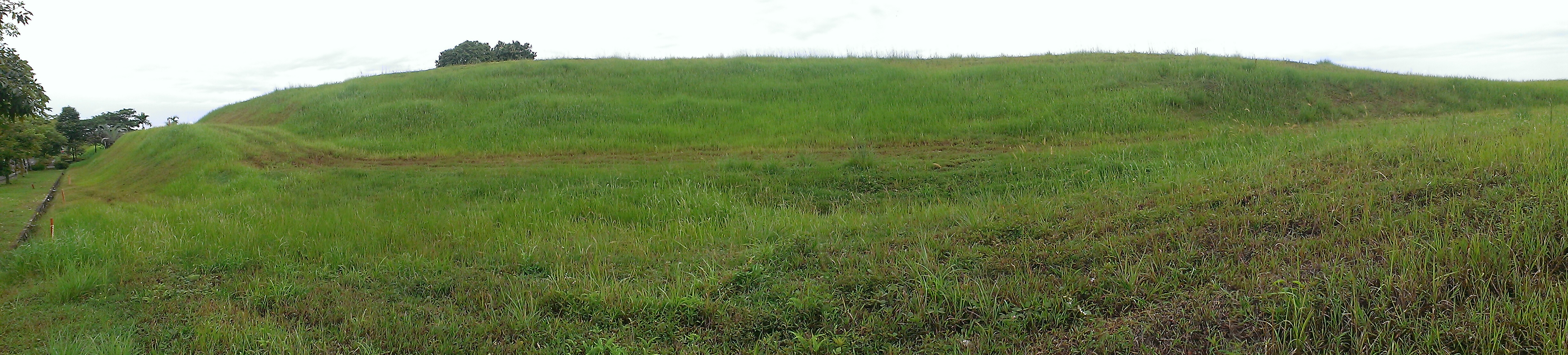
We are beginning to design and build a productive and pretty garden using permaculture principles on a 1.3 acre land in Johor Malaysia! The owner will be building a small house as a retreat for his company staff. This will be a place of relaxation with fruit trees, vegetables and herbs for visitors to harvest. There will also be ponds, small livestock (chickens, ducks, rabbits, bees), rainwater harvesting, and more.
Farming
Creating Terra Preta and Using Urine to Fertilize
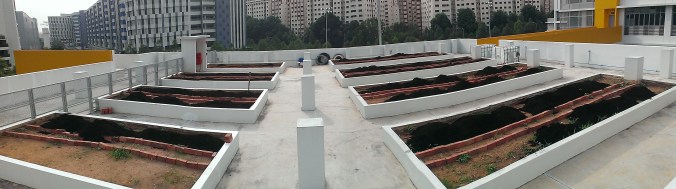
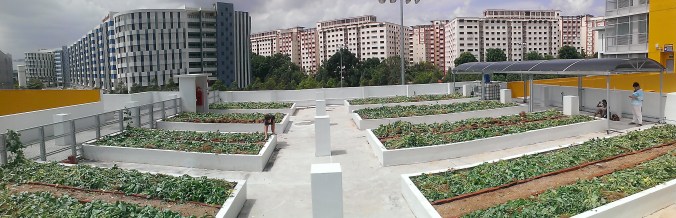
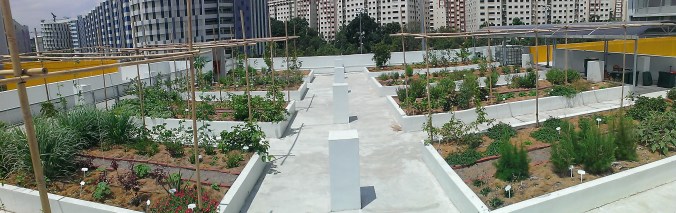
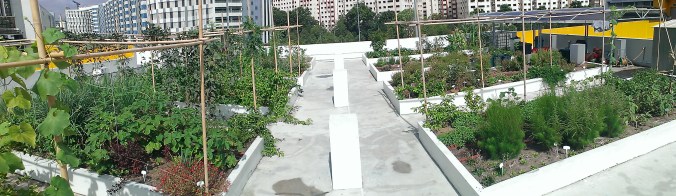
We have been farming at Project Spectra for close to a year. The rooftop conditions are especially challenging with the heat and wind. Only certain plants that can adapt to these conditions do better at our garden, like beans and legumes.
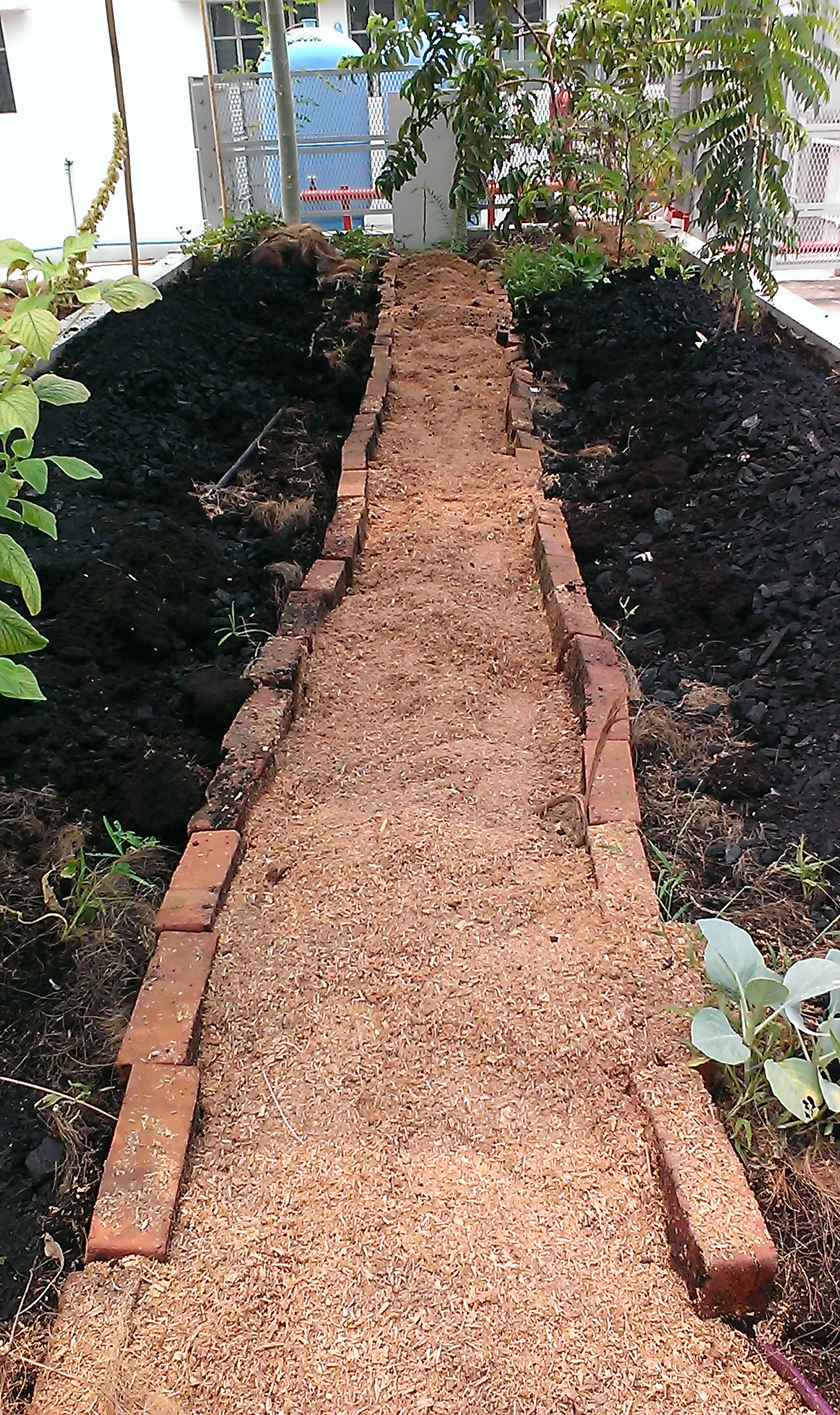
During the school holidays, we decided to do some soil amendment by adding biochar. Terra preta is man-made soil created by an ancient farming method in the Amazon Basin between 450 BC to AD 950. It literally means “black earth” because of the high charcoal and humus content in the soil. The ancient farmers have digging charcoal into the soil sometimes up to a depth of 2 meters. There are a few reasons for doing so:
- Biochar reduces nutrient leaching which is a major problem in places with very high rainfall, like the Amazon Rainforest and Singapore. Much of the plant nutrients are water-soluble and they get washed away during a heavy rain into the rivers (or in the case of SIngapore, the drains). Charcoal is extremely porous so they have a very high surface area to volume ratio and these pores hold on to the nutrients.
- The high porosity characteristic of charcoal also encourages microbial activities in the soil. They provide spaces for bacterial and fungi that help with the ecosystem of the soil.
- Biochar is slightly alkaline and helps to balance the pH of tropical soil, which is typically acidic.
- Biochar helps to moderate the wet and dry cycles in the soil. The numerous pores absorb moisture when the soil is wet and release them when the soil is dry. The roots of most plants enjoy a condition where it is moist enough but not too wet that they suffocate without air.
- Lastly, biochar will last a very long time in the soil. Unlike compost or ash, it doesn’t break down. This is why we still find Terra Preta in the Amazon after thousands of years. Talk about permanent agriculture!
Permaculture Perak: Living beside a Jungle
There are many organic farms in Malaysia, but I have been searching for one that is not growing commercially to sell to the market. I am more interested to see subsistence agriculture rather than market-oriented agriculture. Subsistence agriculture is when the farmer grows to feed the family and sell the produce only if there is excess. There is a big difference between both. Permaculture Perak is one of the few that I found. It is located in the state of Perak in northern Malaysia, a short drive from charming Lenggong town. To access the land, you would most likely need a 4-wheel drive because of the steep uphill climb into 500m altitude.
Ladia and Amy live on the land with their two year old daughter and newborn son. Their neighbours are gibbons, wild boars, snakes, scorpions, and every once in a while an elephant who ransacks the kitchen for soy sauce. The only human neighbours are far away, down in the town of Lenggong. Continue reading
Baiting wild honeybees in Singapore
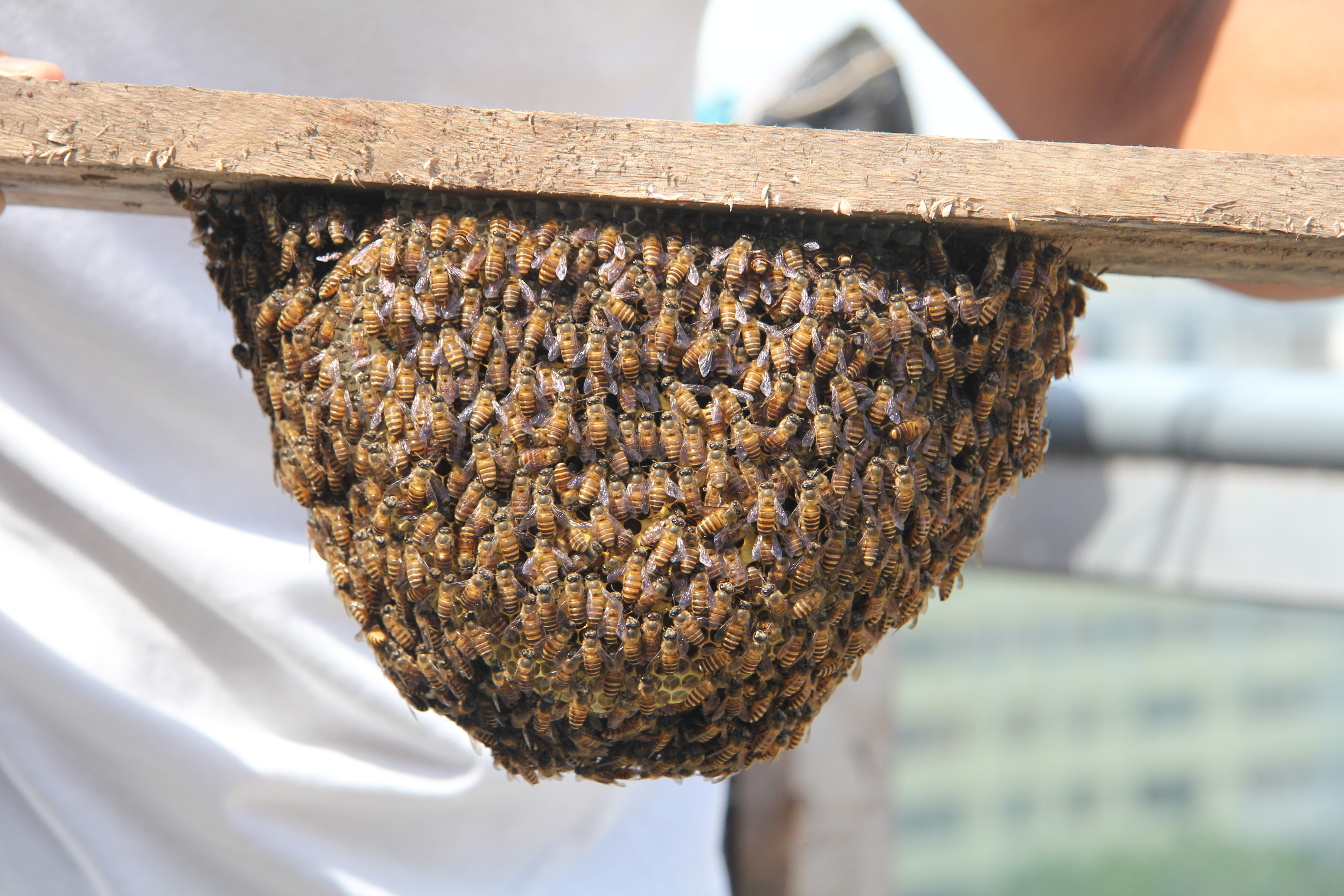
We have been keeping bees in Singapore for over two years. I don’t mean keeping in the sense that we keep pets like dogs and cats, or even domesticated animals like chickens and goats. Bees are wild and they don’t need us to feed or protect them to survive. They forage for their own food in the surrounding flora and they defend themselves from honey robbers like ants (and sometimes humans). If they don’t like where you keep them, they simply move off to better grounds.
Urban beekeeping is a growing movement in different cities over the world. There are over 3,000 bee hives scattered across London. There are also many on top of hotels, museums, and other prominent buildings in global cities like New York, Paris, Hong Kong, and Melbourne. Singapore is late in the game! Continue reading
Maemut Garden – A young but thriving farm
The last stop during our Chiangmai trip was a 10-acre piece of land about an hour southwest of Chiangmai in the village of Maemut. To get there, we rode along the beautiful valley into the mountains, leaving the urban areas behind us. We saw a motorbike crash right in front of us which really reminded us of the dangers lurking behind the enjoyment. We passed by some touristy venues like river rafting and elephant riding without stopping.
A young family lives at Maemut Garden. Marco is a humble Italian who speaks Thai. Nok is the reason Marco turned his short Chiangmai trip into a permanent stay. They have a two year old baby daughter Serena who entertains us with her budding talent in traditional Thai dancing. Pi Hom is a Thai lady that helps out with everything and made the farm what it is today. Other than these permanent occupants, there are also people staying for different durations. Long-term renters for over a year, home-stayers for a few days, and volunteers for a few weeks. Continue reading
Project Spectra 3 – Building Biomass and Stablizing the Ecosystem
It has been over 3 months since we last updated about Project Spectra. Back then, we chopped and dropped the green manure to prepare for a round of planting. After leaving the green manure to break down in the soil for a week, we started planting works. Here is our progress so far.
- Oct 2014: Spreading compost
- Dec 2014: Green manure at its peak
- Dec 2014: Green manure chop-and-drop
- Dec 2014: Planting job done
- Feb 2015: Growing…
- Apr 2015: Everything here is edible!
While the garden today is very much different from what it was before, we are still dealing with many problems that come with starting a garden from scratch. There was zero life on this rooftop just a few months ago and you are creating a universe! The ecosystem is still unstable and the rooftop conditions are too hot and windy. We have started the process of restoring soil fertility through adding compost and green manure. However, there is still lots to be done by nature herself, and nature does not rush. Continue reading
Starting a Food Forest on New Land
During our stay at Maejo Baandin in Chiangmai, we met a couple who have been staying there for a while. Po is from Bangkok and Shiran is from Israel. They are both musicians and met in India when they were there studying classical Indian music. They have a small white dog that they adopted from the streets.
They had recently bought a piece of land around Maejo village to – as Po puts it – retire on. Po was a music producer and had been in the music industry in Bangkok since he was a university student. He eventually became very jaded of the superficiality and commercial aspect of the industry that he moved to a remote island in Thailand. He has traveled around quite a bit and was even a forest monk for a year. Po might seem very old from my description but he is only in his early 30s. He laughs readily and his humour is eccentric. When offered an ice-cream by a young boy, he exclaimed: “No I can’t eat that, I’m a rockstar! Continue reading
Maejo Baandin – Building Houses with Mud
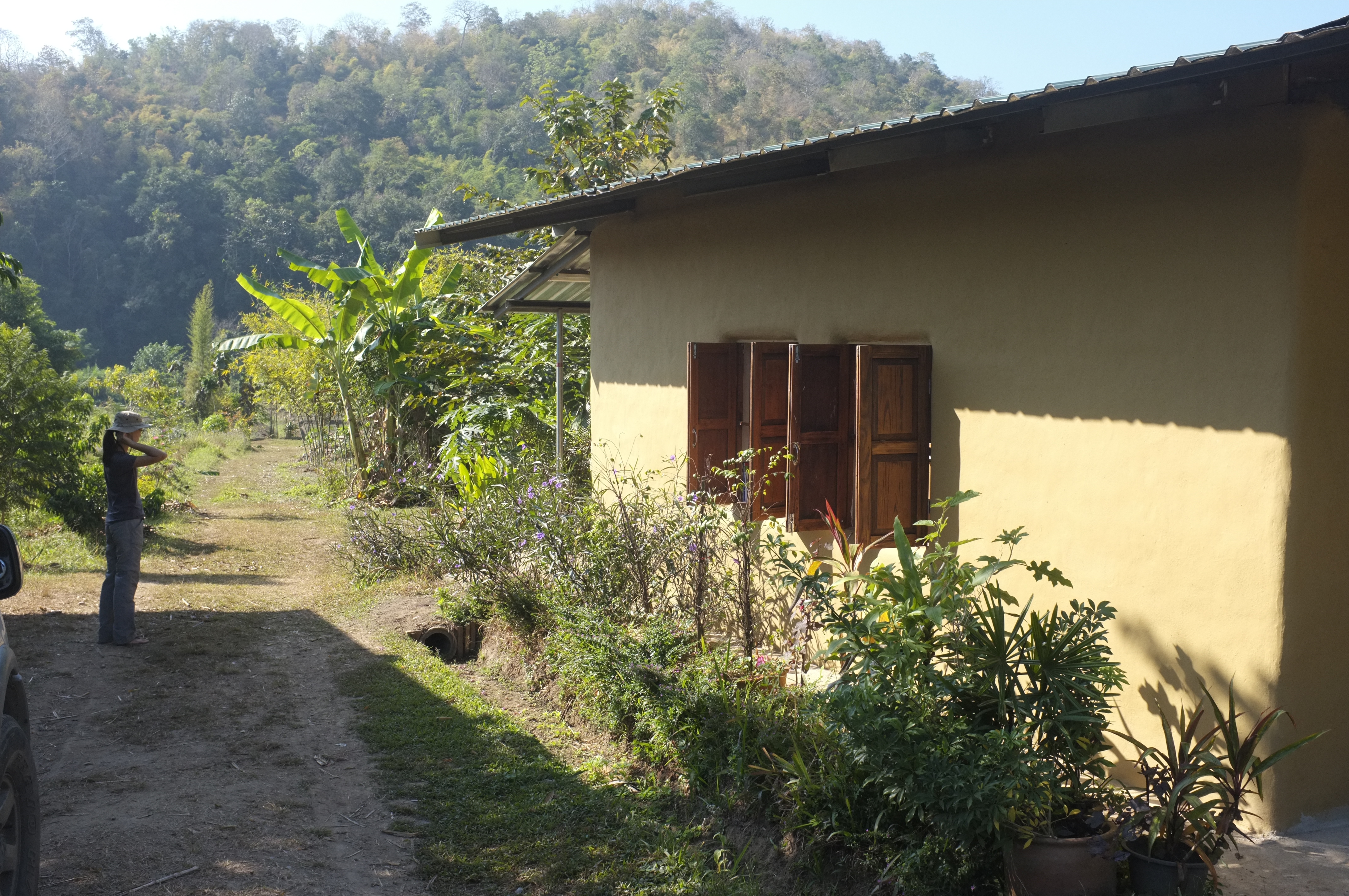
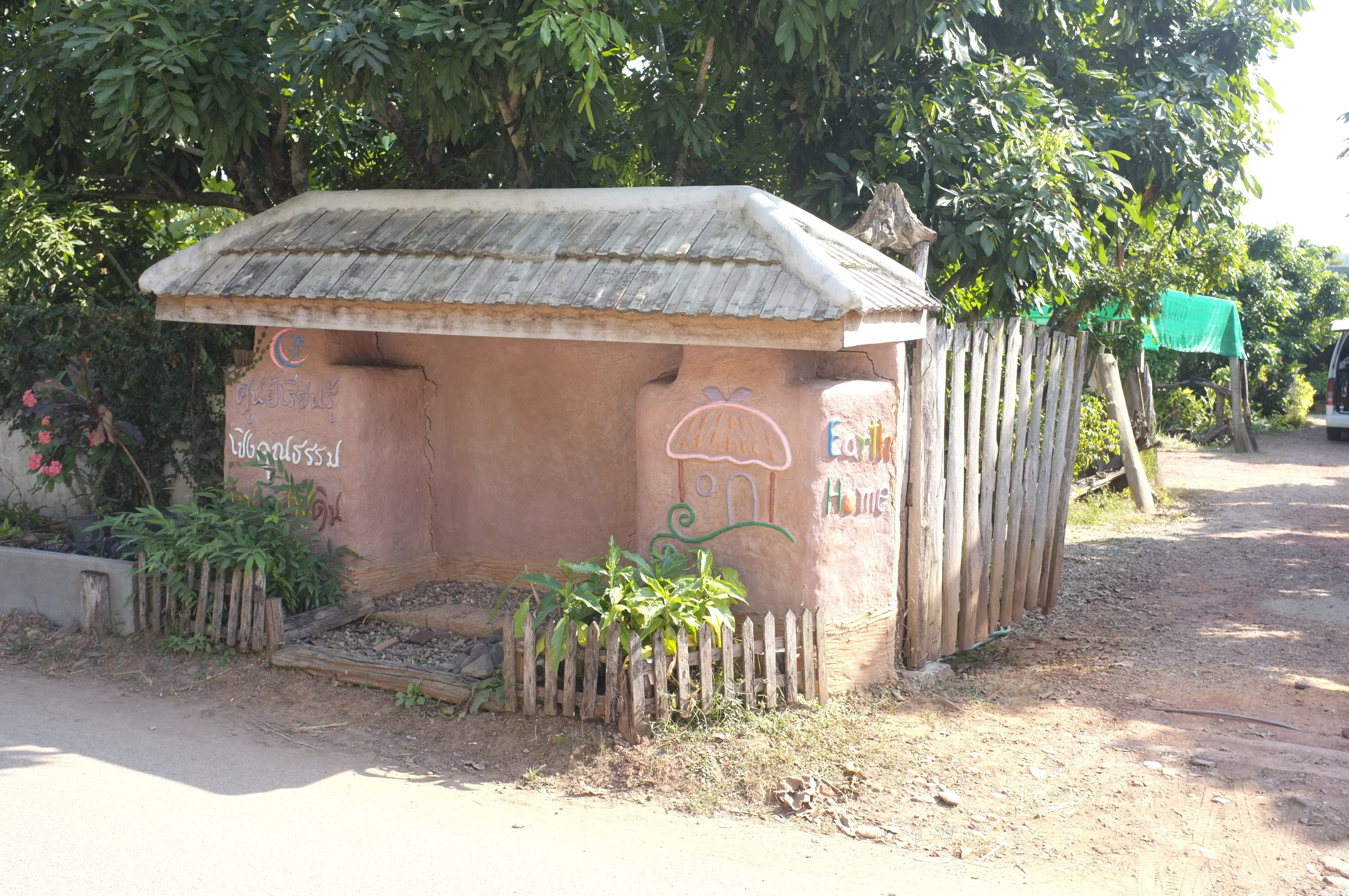
After leaving Mindful Farm on the second day of 2015, we once again hopped on to our neglected motorcycle and went on the road. After taking a few wrong turns, getting lost, and asking around, we finally got to our next destination – Maejo Baandin. Maejo is the name of the village, “baan” means home in Thai, and “din” is earth. Not surprisingly, we were greeted by many beautiful mud structures in the premise.
Maejo village is a remote village located 2 hours drive North of Chiangmai city. In this village within walking distance to one another, there are three places that promote sustainable living – Maejo Baandin, Pun Pun, and Panya Project. Pun Pun promotes mud building and seed saving for self-reliance. Panya Project is a community of volunteers and they regularly teach permaculture courses. Continue reading
Video: How Wolves Change Rivers
A short video that talks about how wolves reintroduced to Yellowstone National Park in the United States after being absent nearly 70 years caused the most remarkable “trophic cascade”. The wolves give life by killing. This shows the importance of biodiversity in any ecosystem, farming or not. It shows the futility of human efforts in micro-planning and micro-managing something as complex as nature. Sometimes you just have to step back and let nature decide…
Narration from TED: “For more wonder, rewild the world” by George Monbiot. Watch the full talk, here: http://bit.ly/N3m62h
Mindful Farm – Cultivating Oneself
I ended year 2014 and stepped into 2015 at a farm a few hours northwest of Chiang Mai city in Thailand. From the name Mindful Farm, you can probably guess that it focuses on mindfulness and meditation. The farm was started by a former monk Pi Nan (literally meaning ex-monk) and his Japanese wife Noriko about 2 years ago. They have a baby girl Nobara who is very calm compared to most city kids that grew up with the ipad. Continue reading