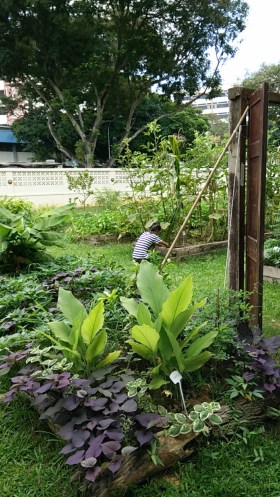
Project Canossian – Tree Belt (Part 3)

img_20161117_121153

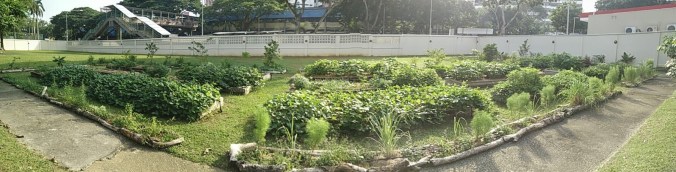
Tree belt on the left, veggie beds behind

When we designed the food garden at the Canossian School, we placed a tree belt around the perimeter of the garden. The trees, when they have grown bigger, will protect the vegetable raised beds in the middle. They will provide:

  1. Partial shade
  2. Wind protection
  3. Fertility in the form of leaf litter
  4. Wildlife and biodiversity

We picked about 30 types of small to medium sized fruit trees. They would be placed at the left, right, and back of the garden. While it would be great to have some big durian and mango trees, the space was limited and we wanted fruits that the kids can pick easily to snack on.

We planted them as a simplified food forest with a few layers – tubers (underground), ground cover, shrubs, creepers, and small trees. Continue reading
Project Lombong – Ten acres of bare soil…

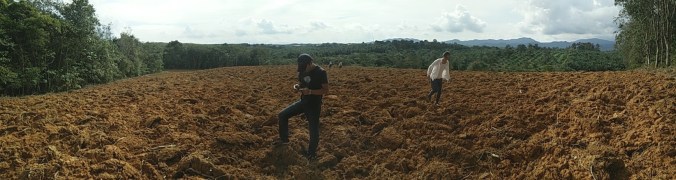
We are starting on a 10-acre piece of land in Johor, Malaysia. It is situated close to Kota Tinggi, a place north-east of Singapore known for fireflies and waterfalls. Kevin approached us recently about this land owned by his family. He wants to do organic farming on it and provide good livelihoods to people working there. The majority of the area will be a mixed fruit orchard but there will be aquaculture and vegetables too. He does not have any farming experience, but we felt that he has good intentions and is someone we can work with.

pano_20161103_160126

View from the highest point

The land was previously a 3 year old rubber monoculture plantation. When we met him, the land had already been cleared of vegetation by a tractor. He said that the contractor was going to dig up all the tree roots and dispose of them. We recommended against that for many reasons:

  • The roots, despite being dead, still holds the soil together against erosion on his sloping land. Over time, they will rot and act as a slow-release fertilizer.
  • Digging mixes up the naturally-formed soil horizons and disrupts all the organisms in the soil.
  • Aerating soil in this manner introduces a rush of oxygen into the soil. That’s a short-term benefit with long-term losses. With the high temperature and moisture here, this means that organic matter and humus decompose rapidly and become lost as carbon dioxide to the atmosphere.
  • Without any big trees or plants to absorb the suddenly available nutrients, they will be lost to the atmosphere (oxidized) or washed away by the rain (leached).

After the first meeting, we scheduled a date to visit the land. Continue reading

Project Canossian – Chop-and-Drop (Part 2)

Sounding as bad-ass and violent as natural farming (not industrial farming) can ever get, chop-and-drop is actually a really effective gardening technique. Simply put, one chops the existing plant down and drops them right away on the spot where the next plant is to grow. Combined with green manuring, it is an excellent way to kickstart your garden

pano_20160823_165717

Green manure growing out of the beds

Our previous post on Project Canossian ended with a round of green manure. Over the next month or two, the green manure helped to:

  • Fix nitrogen: roots of legumes (beans and peas) act symbiotically with certain fungi to convert nitrogen in the air to the soil for plants to absorb
  • Create biomass: the vigorous growth means that you get a mass of organic matter for mulching when you chop-and-drop
  • Settle the soil: gives time for the newly poured soil and compost to stabilize

Continue reading

Project Canossian – Building A Garden With Waste (Part 1)

A few months back, we built a food garden for the Canossian School in Singapore. They work with kids with hearing impairment and the school principal Terry wanted a sensory garden for the kids to develop all their senses. She lamented a few times about how children nowadays do not get to pull things out of the soil.

Canossian School is very fortunate because they actually have unused space for a garden. We have spoken to many schools that want a food garden but do not have any space left. We would walk the school grounds to find that everywhere has been concreted or planted with trees. Canossian School has a sizeable and flat grass patch and we were allocated about 35m x 11m for the garden.

2015-12-04-10-47-12

The possibilities are endless, like a blank canvas.

Analyzing the Site

Before even thinking about garden design, we needed to understand the site. From a distance, we noticed many bare patches that grass did not grow on. That’s not a good sign. The type of vegetation growing on it was odd as well. Walking the ground, we immediately noticed that the soil was soft. It was not the spongy softness of a soil with good structure and many pores. It was a muddy kind of softness like wet pottery clay. As expected, there had been major soil works about a year ago. We learned that there is construction waste like concrete rubble beneath the soil. There is no top soil but just a layer of yellow clay. It’s not a great start but we are used to all these in urban environments. Continue reading

Project Merbok – Windbreak

_DSF2252

Being the highest point on this open grassland means lots of wind!

We finally started work on Project Merbok a few months back. One of the most important things we started with was to create windbreaks. You might ask: what’s wrong with enjoying a breeze in our warm humid climate? While a gentle wind helps with air circulation, too much of it causes many problems.


  • Soil erosion: Organic matter (dead leaves, dried twigs) are very light and will get blown away easily. That leaves the soil exposed and also takes away the nutrition from rotting matter that the soil needs.
  • Dryness: Wind removes moisture from the soil and plants. It’s the same principle as sunning your clothes on a windy day. Without moisture in soil, micro-organisms and earthworms die. Without moisture in soil, roots can’t bring water up to leaves.
  • Energy wastage: Plants would have to expend energy to resist wind to stay upright. They would be reaching for the sun but pushed sideways by the wind. The wasted energy could be better used for biomass growth or food production. Compared to trees, grasses deal with wind much effectively. That’s the reason you see so much lalang on this site!
  • Mechanical damage: Malaysia is quite sheltered by surrounding islands and typically do not suffer from typhoons. However, there are still windstorms that can uproot big trees. Even if the plant is well-rooted, the leaves can be mechanically damaged by the wind itself or rubbing against other leaves.

Continue reading

Becoming A Forest

2016-06-05 12.09.42

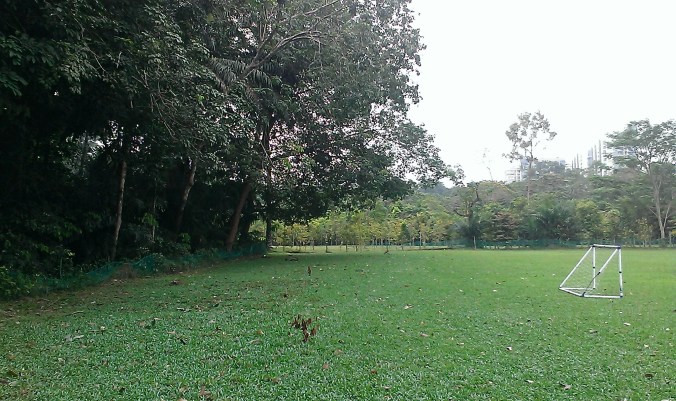
The forest beside the lawn

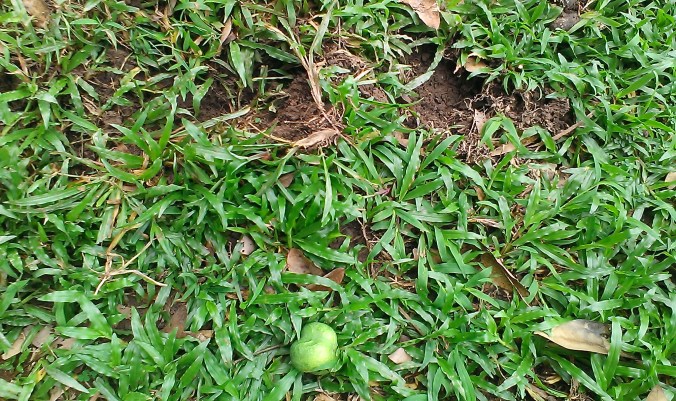
On a pleasant Sunday morning, I observed some interesting happenings along the edge of a forest at Lower Pierce Reservoir where I jog to or play football occasionally. There were some patches of upturned soil on the otherwise flat and trimmed lawn. It was somewhat thrilling because I felt like a detective at a crime scene, gathering clues to figure out what happened. Even better, I also felt like a hunter tracking a prey by reading signs left behind to foretell what might happen in the future. Here’s the story of what I think happened…

2016-06-05 12.10.05

The crime scene: upturned soil and an unknown fruit

Continue reading

Made in Singapore – The Story of Three Veggies

Over the weekend, I gave a talk at a conference in downtown Singapore. The conference is called FutureME and showcases emerging ideas, innovation and trends shaping our future. There were a few speakers addressing urban farming and local food. I guess that people in Singapore are becoming more concerned about food issues.

My talk was probably the shortest. It is a story of three locally grown vegetables. It is a response to the many high-tech growing systems that I am starting to see more of only recently. Hydroponics, aeroponics, aquaponics, indoor growing, soil-less growing, etc. Continue reading

Bumi Langit – Make Your Own Heaven

Siang Yu is a friend and fellow farmer at Edible Garden City. She is also an environmentalist and translator. She is currently on a sabbatical in Indonesia. People find it funny that we full-time urban farmers choose to go to farms during leave from work. Here is the first guest post about her trip…


Earlier in January, I went to Yogyakarta because I had heard that permaculture was gaining traction there and I wanted to see it for myself. Thomas and my colleague Imran briefly mentioned Bumi Langit to me once, and I thought it would be a good idea to visit them. Bumit Langit is founded by Iskandar Waworuntu in 2006. He had started a farm in Bali prior to this and I later learned from someone else I met while travelling that Pak Iskandar went to Sumatra to learn about farming. They were a little difficult to contact – I emailed them 2 weeks before I left for Jogja, but never got a reply. So I decided to wing it and found a driver when I arrived in Jogja who could take me and my friend Adiel to Bumi Langit in Imogiri directly.

At Bumi Langit, we met Mas Salas, the person-in-charge of the warung (shop/eatery), when we decided to have dinner there. After learning that I was interested in permaculture and was keen to volunteer with them, Mas Salas sat down with us and we had a very long and engaging chat about permaculture beyond agriculture – permaculture as a lifestyle. It was meeting a kindred spirit. We spoke about capitalism, the pharmaceutical industry and the poison that is television (and Indomie haha). He emphasised the importance of differentiating between human need and human greed. We could choose to fill our lives with junk that we are told we need or we could critically decide for ourselves what the things we truly need are. Rooted in the principles of Islam, Mas Salas said, “Whether we go to heaven after we die, that is decided by God. Why don’t you make your own heaven while you are alive?”

1 Continue reading

Free Range Chicken – To Be Or Not To Be?

Chickens are one of the most commonly kept livestock in the tropics. They are very productive for meat and eggs. Being small, they do not present the challenges of larger livestock like cows and pigs. All-in-all, their widespread presence in rural Asia indicate that chickens are the preferred choice for smallholdings.

Keeping chickens in battery cages has been a controversial topic of modern industrial farming. Other than the cruelty of immobilizing an animal in a cage barely its size, the widespread use of antibiotics, growth hormones, and other chemicals gives rise to many health concerns. The opposite of battery cage is to let the chickens range freely over a natural vegetated environment.

_DSF1626

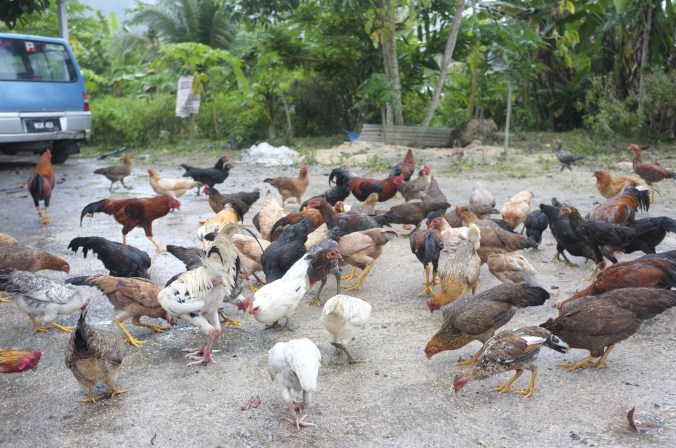
Free ranging chickens

While the idea of free range sounds fantastic in theory, there are reasons that some of the farms we have visited do not let their chickens range freely. The chickens there do range but are limited to an enclosed area. Some of the reasons for not letting the chickens range freely include:

  • Attack by predators like snakes, wild boars, eagles, etc.
  • Hygiene considerations since the chickens will not use a designated toilet
  • Messing up the garden by scratching up seedlings and eating vegetables
  • Keeping the eggs to a limited area for ease of searching

Continue reading

Book Review: David Holmgren’s Permaculture Principles & Pathways Beyond Sustainability

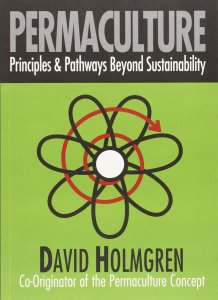
71CQMQ7BjaLI recently came across Permaculture: Principles & Pathways Beyond Sustainability written by David Holmgren at the library. To be honest it wasn’t a book on the top of my must-read list. When one talks about permaculture books, there will be more well-known ones like Bill Mollison’s Permaculture: A Designers’ Manual (a.k.a the permaculture bible) or Toby Hemenway’s Gaia’s Garden. It just happened that I was going to be spending three weeks back in the military as part of mandatory national service and that means lots of spare time to read.

The Author

Lets start with the author. Some of you might have heard of David Holmgren because he was the co-orginator of the permaculture concept together with Bill Mollison. Mollison was actually Holmgren’s professor at that time. The first time they introduced the permaculture concept to the public was in Permaculture One in 1978. At that time Holmgren was only 23 years old. Talk about precociousness!

Holmgren did not co-author the other permaculture books that Mollison published thereafter. He was also less prominent in public with teaching and spreading permaculture than Mollison. So what has he been up to? It was 24 years between 1978 when he published Permaculture One and 2002 when this book was published. Apparently Holmgren has been spending all this time testing and refining his theories on different sites in Australia. I was very interested in seeing what this guy has to say after all these years. Continue reading