Project Spectra 2 – Green Manure + Chop-and-Drop

Earlier, we posted about kickstarting the rooftop farm at Spectra Secondary School by growing green manure. You can read about that here. We are happy to report that the legumes have been growing very happily and rapidly. We have been intentionally lazy and have not watered or done anything. There is a time for us humans to work hard and there is also a time to sit back and watch nature do her magic. As expected, the monsoon rain really sped up the growth of our green manure.

Week 3

The legumes have sprouted and grown through the thin layer of mulch. You can literally see it growing by the day!


Continue reading

Project Spectra – Farming on a Rooftop

We were tasked to build a farm on the rooftop of Spectra Secondary School recently. It is a new secondary school in northern Singapore that focuses on vocational and practical skills so that students will be well-equipped to work upon graduation. The school’s philosophy behind this rooftop farm initiative is “No One Owes Us a Living – We Work Hard to Put Food on the Table”. As such, we will also be teaching the students how to farm organically. I have no doubt that it is out of this world for these city teenagers.

The barren rooftop when we first stepped onto it.

The barren rooftop when we first stepped onto it.

The good and also bad thing is that the infrastructure is already built. There are 11 big concrete planters filled with soil which means we can start growing soon. Unfortunately the soil has been left bare for a few months. In the tropics, this mistake was magnified by the baking sun and torrential rain. I learned from the school that the landscape contractor has scraped off the top layer of the soil because it was muddy. My guess is that the “mud” is actually the fertile top soil that got damaged by the elements. We are now left with the clay subsoil… Continue reading

Using Trees to Build Swales?

As I walk around the city of Singapore, I can’t help but constantly observe the grass, the soil, the trees, and the insects. It’s a job hazard and a rather enjoyable one. I have even become pretty good and figuring out soil fertility and moisture with my feet when I walk barefoot.

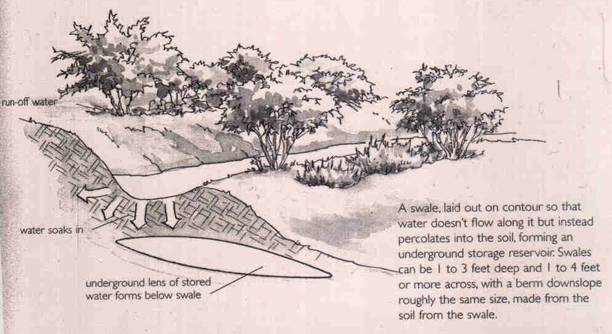
Recently I have been noticing swales. For those of you unfamiliar with it, swales have become synonymous with permaculture as they were popularized by Bill Mollison and other advocates of permaculture. In short, swales are water-harvesting ditches, built along the contours of a landscape. They slow down water runoff, trap the water, and allow it to infiltrate into the soil. However it’s not something new; traditional farming societies have been doing it for thousands of years. Terracing is but another form of swaling. To learn more about swales, click here.

Swale

Diagram of swale from Gaia’s Garden by Toby Hemenway

There are actually quite a lot of swales around the city. Who is the hardworking permaculturalist? Continue reading

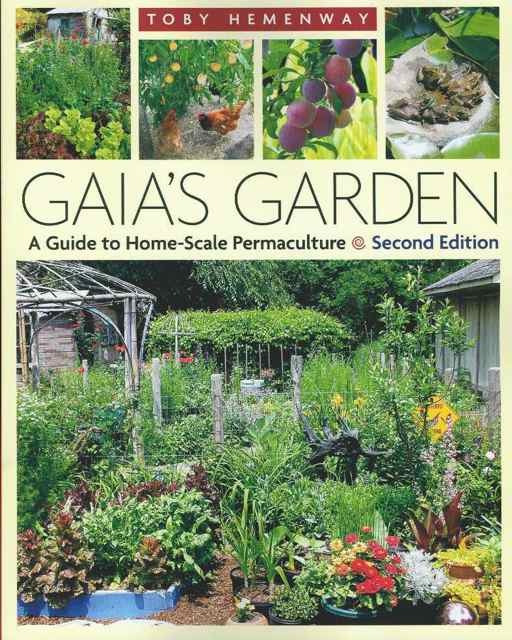
Book Review: Gaia’s Garden by Toby Hemenway

gaias_gardenI read Gaia’s Garden by Toby Hemenway a few months back. I think it’s a good time to give a brief review now that I have given all my learning and thoughts time to settle and synthesize. I don’t have the book beside me for reference and I am only recalling from memory the elements that struck me most.

I found this book in the library after searching for “permaculture” in the catalog. It is probably the most popular permaculture book that has been written in recent years. To be honest, I was quite impressed that the Singapore library actually has books on permaculture considering how alternative it is. There is an element of subversiveness in permaculture, as Bill Mollison said it himself. When he heard a reviewer describe his teachings as seditious, he said:

Yes, it was very perceptive. I teach self-reliance, the world’s most subversive practice. I teach people how to grow their own food, which is shockingly subversive. So, yes, it’s seditious. But it’s peaceful sedition.

Well, it definitely does not look subversive from the cover of the book! Continue reading

Project Green Valley – Order Within The Mess

When we started work on Project Green Valley, it was but a barren piece of land with grass growing on hard sun-baked clay. I remember wondering where so many fist-sized stones came from. They were actually hardened and dried pieces of clay. The soil was in bad shape and there was a lot for us (and nature) to do before we restore fertility. After about a year, this is how it looks.

Green Valley

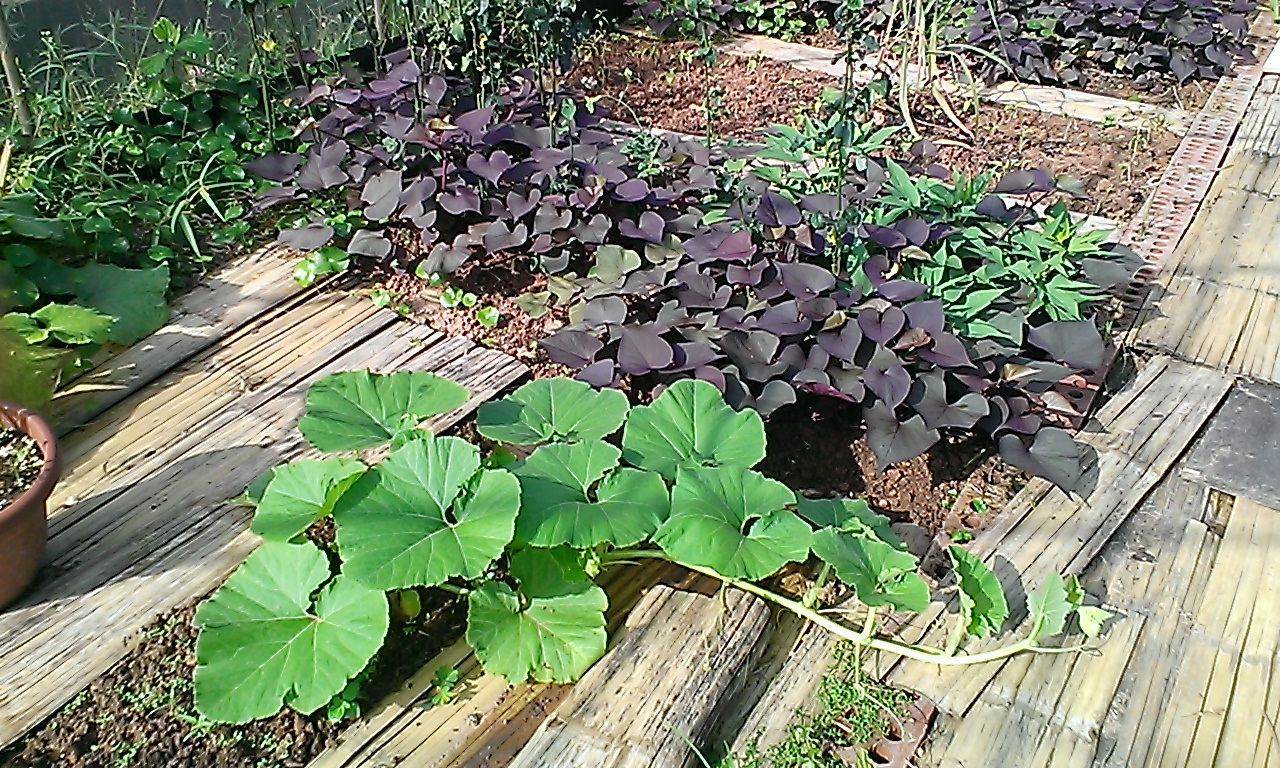
A food forest! See if you can spot sweet potatos (green, purple, yellow), kang kong, wild spinach, sweet leaf, papaya, banana, tapioca, bitter gourd, lemongrass, citronella, passion fruit, and more!

The way it is today, Project Green Valley requires almost no watering. Even if we had to water, we would draw from the pond and not rely on tapwater. There is little need for weeding because the soil is densely planted with no area of exposed soil. The strong sunlight grass needs would have been filtered by the other taller plants by the time it reaches the soil. Continue reading

Digging a Banana Circle

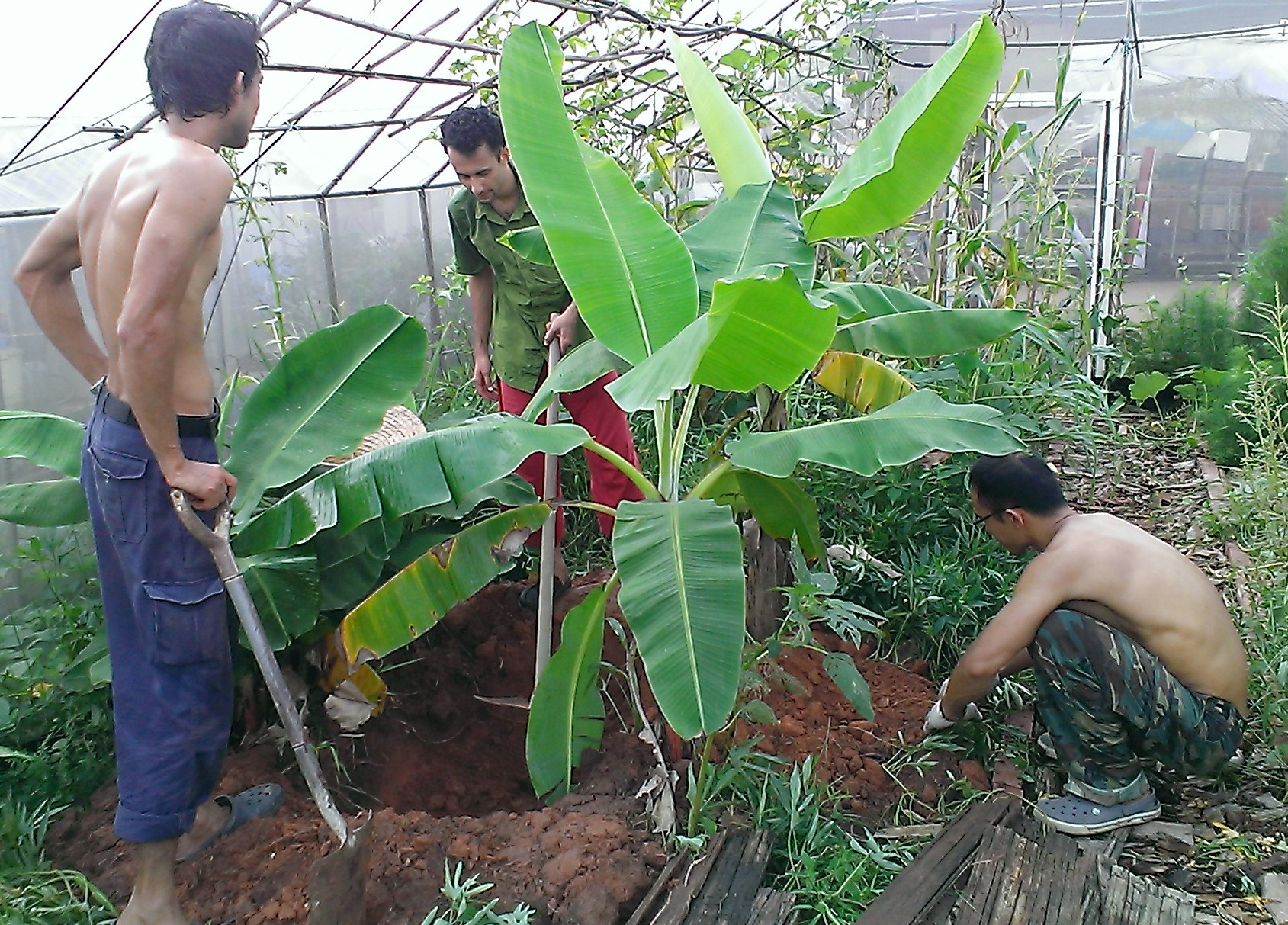
Digging Banana CircleOne thing I really enjoy at a permaculture garden is that you can litter without feeling guilty. Growing up in spick-and-span Singapore we have been taught since young to put litter only in the rubbish bin. Any piece of trash left on the concrete floor is an eyesore and has to be cleaned up by someone else. This is why it felt so liberating when I could throw my organic waste anywhere in the farm. In fact, my act of littering will be adding to the fertility of the soil and if I was lucky it might even be seeding a tree!

The banana circle is a simple yet effective design for permaculture in the tropics. It is basically a circular trench with bananas planted at the rim of the trench. All kinds of organic waste can be thrown into the circle, including dead leaves, garden prunings, kitchen waste, hay, rice husks, even short logs. Anything that will rot can be thrown in. As the organic matter breaks down, the hungry banana trees will readily suck up the nutrients and turn the waste into yummy bananas. The depression into the ground helps to retain moisture that the bananas love and also speed up decomposition. Continue reading

Practical Permaculture Course in Malaysia

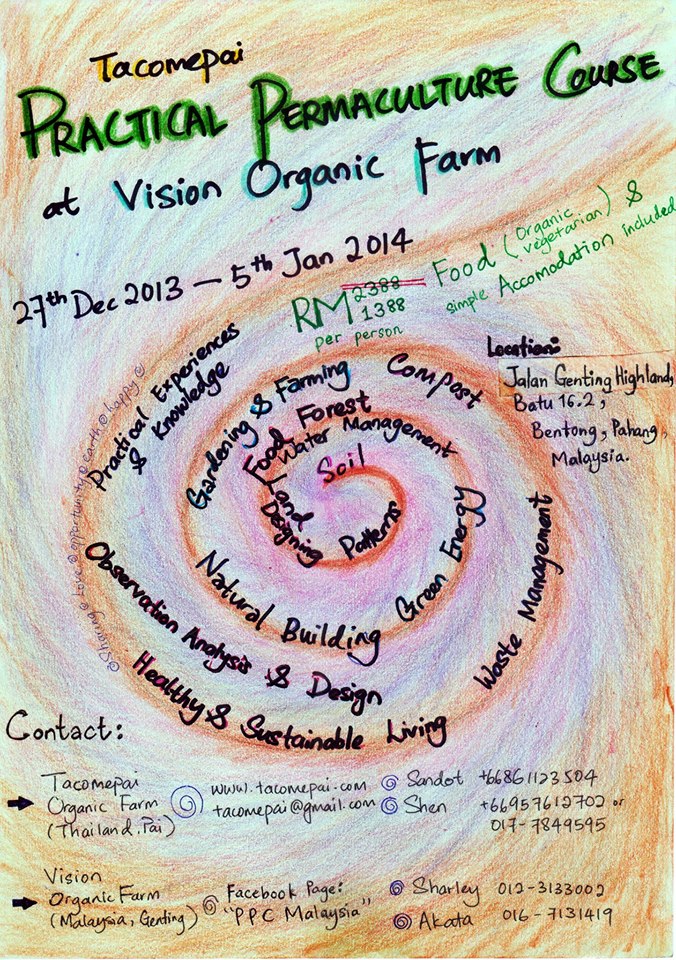
Practical Permaculture CourseIt’s one thing reading about permaculture on the internet and another learning in-person from an experienced practitioner. I was lucky to spend 10 days over the 2014 New Year holidays with Sandot from Tacomepai Farm in Thailand. Sandot was traveling in Malaysia to help a friend design and build a permaculture farm called the Green Forest Project at the foot of Genting Highlands. The objective of the Green Forest Project is to be a healing center for cancer patients and permaculture educational centre. Sited in a valley within beautiful forests, the founder Sharley envisions the 3 acre land to be secluded from the outside world. Food will be grown organically and served to the cancer patients who will live very close to nature in simple huts. Continue reading

Project Green Valley – Our Very Own!

Most of our time at Edible Gardens is spent building food gardens for other people. We design the gardens based on their aesthetics and we grow the plants that they like to eat. It’s still lots of fun but you feel different when it is your own garden. In this sense we are very lucky to have a small plot of land that we can do anything we want.

Polytunnel

Barren land when we first took over. Polytunnel overhead.

Ok, our land is not really ours since it is adopted from Green Valley Farms, a commercial organic farm that has set aside part of their farm for recreational farmers/gardeners to adopt plots to grow edible plants.

Like most of the other plots, ours is about 100 sqm (~1000 sq ft) measuring 20m by 5m. It is within a polytunnel which means the plot is covered completely by a plastic sheet or net overhead. In Singapore and Malaysia, it is very common practice for commercial vegetable farmers, organic or not, to grow in a polytunnel. The polytunnel gives the farmer control over the rain and sunshine. It is supposed to keep pests and birds away from the vegetables as well. Continue reading

A Fixation on Nitrogen Fixation

2014-01-11 09.47.03Nitrogen is one of the three macro-nutrients needed for healthy plants. It is the eldest brother N within the NPK trio. In the tropics, this vital ingredient is often found lacking in cultivated soil. From my experience using the soil test kit in various gardens in Singapore, nitrogen always shows up as “low”.

How can this be! There are tons of nitrogen in the atmosphere, roughly 78%. However, atmospheric nitrogen doesn’t just flow into the soil readily as it is inert. Continue reading