Using Trees to Build Swales?

As I walk around the city of Singapore, I can’t help but constantly observe the grass, the soil, the trees, and the insects. It’s a job hazard and a rather enjoyable one. I have even become pretty good and figuring out soil fertility and moisture with my feet when I walk barefoot.

Recently I have been noticing swales. For those of you unfamiliar with it, swales have become synonymous with permaculture as they were popularized by Bill Mollison and other advocates of permaculture. In short, swales are water-harvesting ditches, built along the contours of a landscape. They slow down water runoff, trap the water, and allow it to infiltrate into the soil. However it’s not something new; traditional farming societies have been doing it for thousands of years. Terracing is but another form of swaling. To learn more about swales, click here.
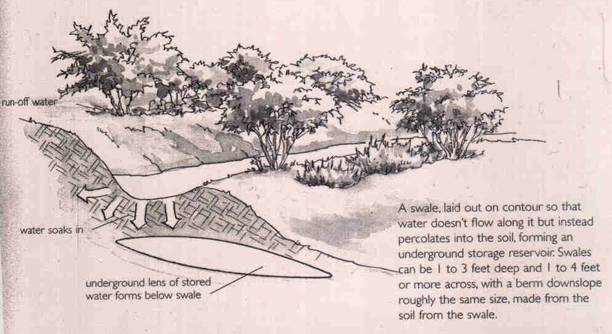
Swale

Diagram of swale from Gaia’s Garden by Toby Hemenway

There are actually quite a lot of swales around the city. Who is the hardworking permaculturalist? Continue reading

Project Green Valley – Our Very Own!

Most of our time at Edible Gardens is spent building food gardens for other people. We design the gardens based on their aesthetics and we grow the plants that they like to eat. It’s still lots of fun but you feel different when it is your own garden. In this sense we are very lucky to have a small plot of land that we can do anything we want.

Polytunnel

Barren land when we first took over. Polytunnel overhead.

Ok, our land is not really ours since it is adopted from Green Valley Farms, a commercial organic farm that has set aside part of their farm for recreational farmers/gardeners to adopt plots to grow edible plants.

Like most of the other plots, ours is about 100 sqm (~1000 sq ft) measuring 20m by 5m. It is within a polytunnel which means the plot is covered completely by a plastic sheet or net overhead. In Singapore and Malaysia, it is very common practice for commercial vegetable farmers, organic or not, to grow in a polytunnel. The polytunnel gives the farmer control over the rain and sunshine. It is supposed to keep pests and birds away from the vegetables as well. Continue reading